Value Creation Process & Examples
The Furukawa Company Group’s Value Creation Process
Building on its history and track record that originated in mine development, the Group has long provided technologies that support social infrastructure. Leveraging this foundation, we will pursue management that balances the resolution of social challenges with the enhancement of corporate value.
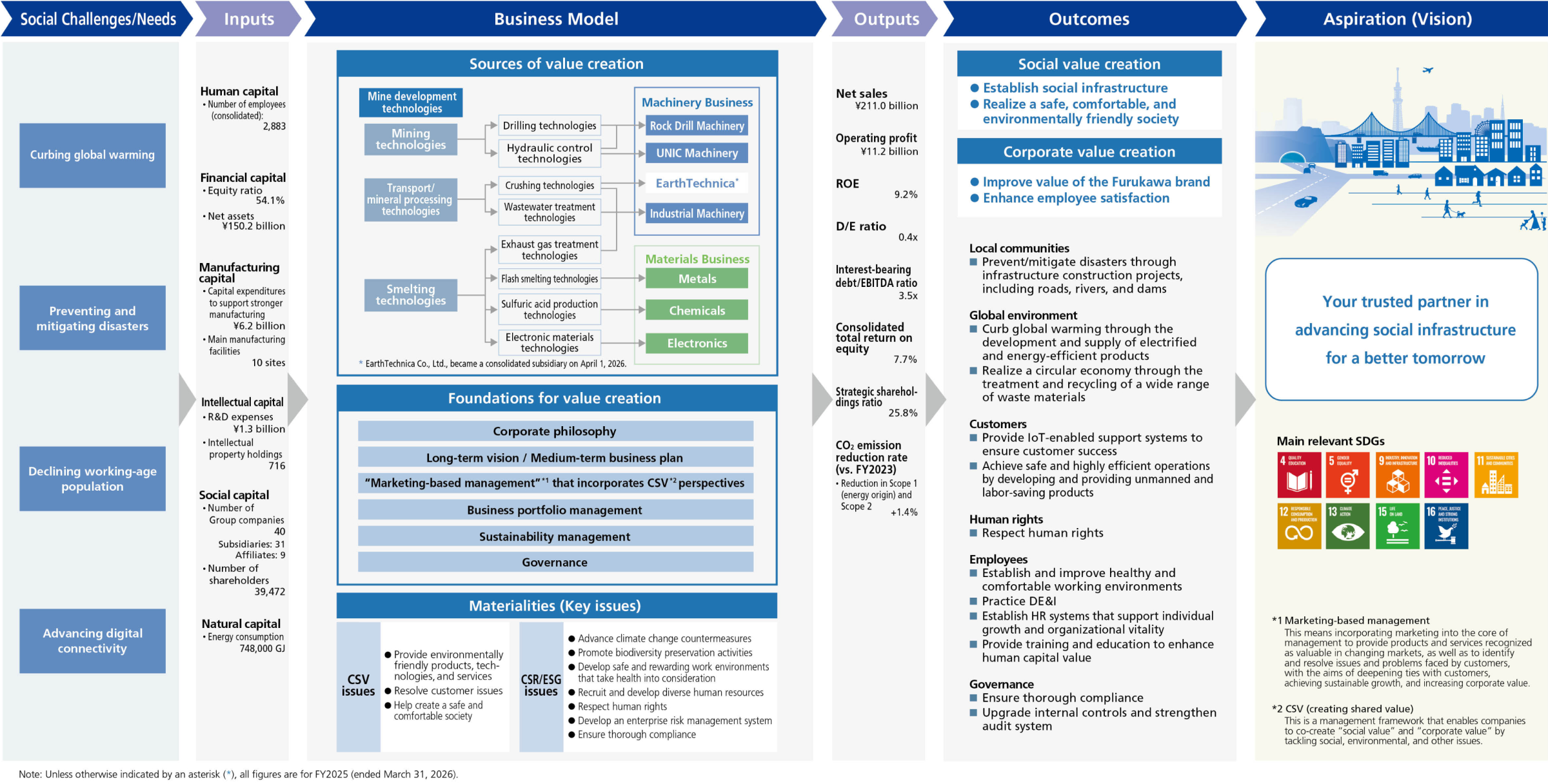
Specific Examples of Value Creation
- 1. Tunnel construction products that help improve safety, workability, and labor savings
- 2. Mini-crawler cranes can be used in confined spaces and indoor settings
- 3. Belt conveyors: Addressing the challenges of soil transport using dump trucks
- 4. High-purity metallic arsenic: Essential material for semiconductors and communications
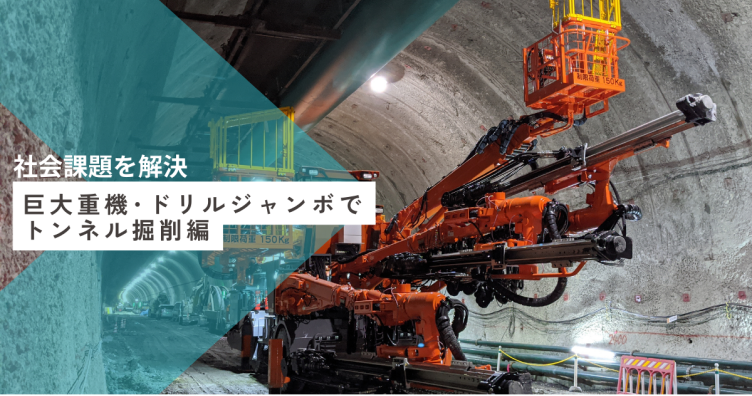
1. Tunnel construction products that help improve safety, workability, and labor savings
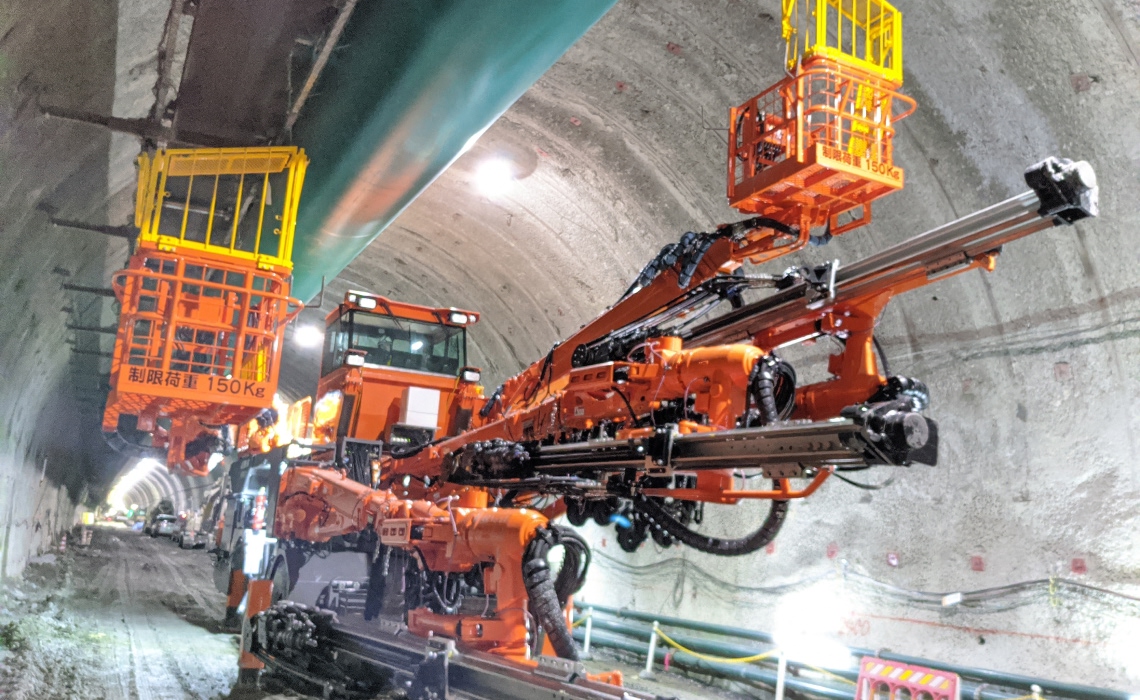
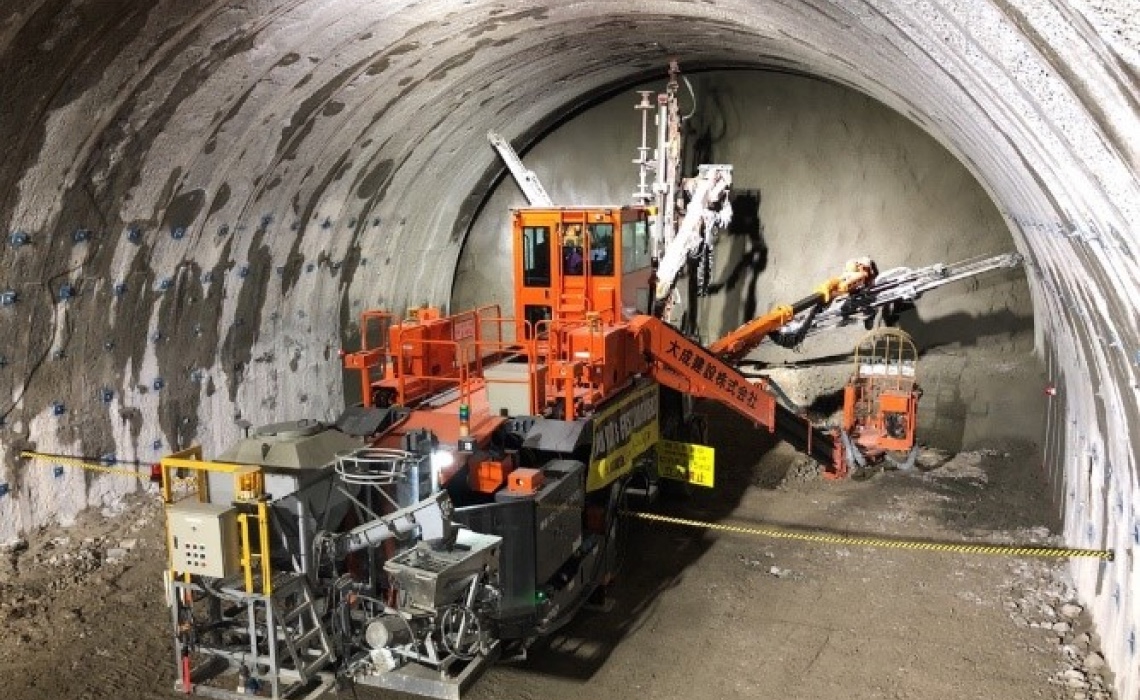
With an 80% share of the domestic market, the Furukawa Company Group’s tunnel drill jumbos are indispensable to the development of transportation networks in Japan’s mountainous regions. In recent years, mountain tunnel construction sites have faced challenges, such as labor shortages resulting from Japan’s declining birthrate and aging population, as well as the need to improve safety in inherently hazardous work environments. Against this backdrop, expectations for the Group’s tunnel construction related products as a solution to these challenges are growing. Our products are in operation at various tunnel construction sites, including those for the Linear Chuo Shinkansen and the Hokkaido Shinkansen, and are expected to play an even greater role going forward.
Our ROBOROCK fully automatic drill jumbo and BOLTINGER rock bolting machine are officially registered in the New Technology Information System (NETIS) operated by Japan’s Ministry of Land, Infrastructure, Transport and Tourism. These highly regarded technologies are eligible for bonus points in technical assessments during performance evaluations for public works projects and in comprehensive evaluation bidding processes.
Through automation and mechanization, the Furukawa Company Group helps improve safety, workability, and labor savings. At the same time, it provides products that help address social issues, such as national resilience, disaster prevention and mitigation, and the declining working-age population, thereby supporting infrastructure development.
features to address social issues
Selected as a “Recommended Technology” under the Minister of Land, Infrastructure, Transport and Tourism Award for Excellence in Technology (announced October 10, 2024)
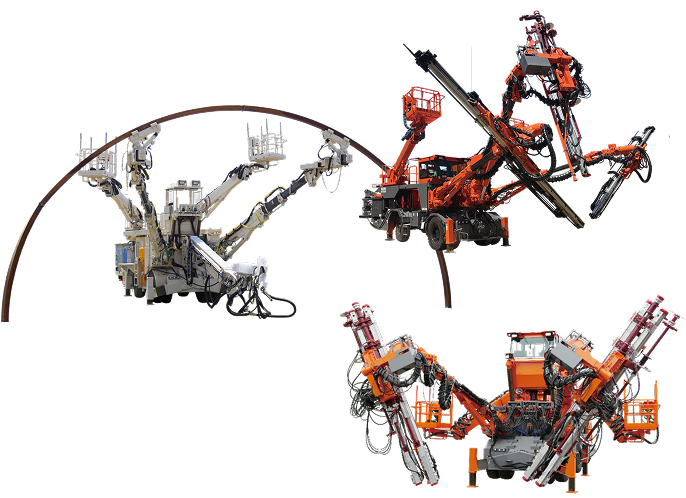
From left: ROBO ARCH (MTH1220), BOLTINGER B32RL, and BOLTINGER B22RL
Two of the Group’s tunnel construction–related products—the ROBO ARCH (MTH1220) steel arch erecting robot and the BOLTINGER rock bolting machine—were recognized for their groundbreaking contribution to safety and productivity in mountain tunnel construction. These machines enhance efficiency in steel arch erection, concrete spraying on tunnel walls, and rock bolt installation. As a result, they were selected from among the new technologies registered in the NETIS as a “Recommended Technology” under the Minister of Land, Infrastructure, Transport and Tourism Award for Excellence in Technology (fiscal 2024).
- Note:NETIS (short for New Technology Information System) is a database operated by Japan’s Ministry of Land, Infrastructure, Transport and Tourism. It is designed to share and provide information on new technologies developed by private companies and others, with the aim of promoting their active use in public works projects.
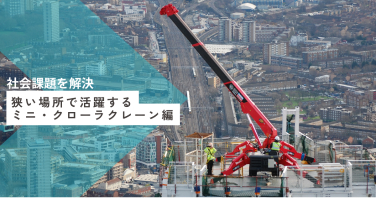
2. Mini-crawler cranes can be used in confined spaces and indoor settings
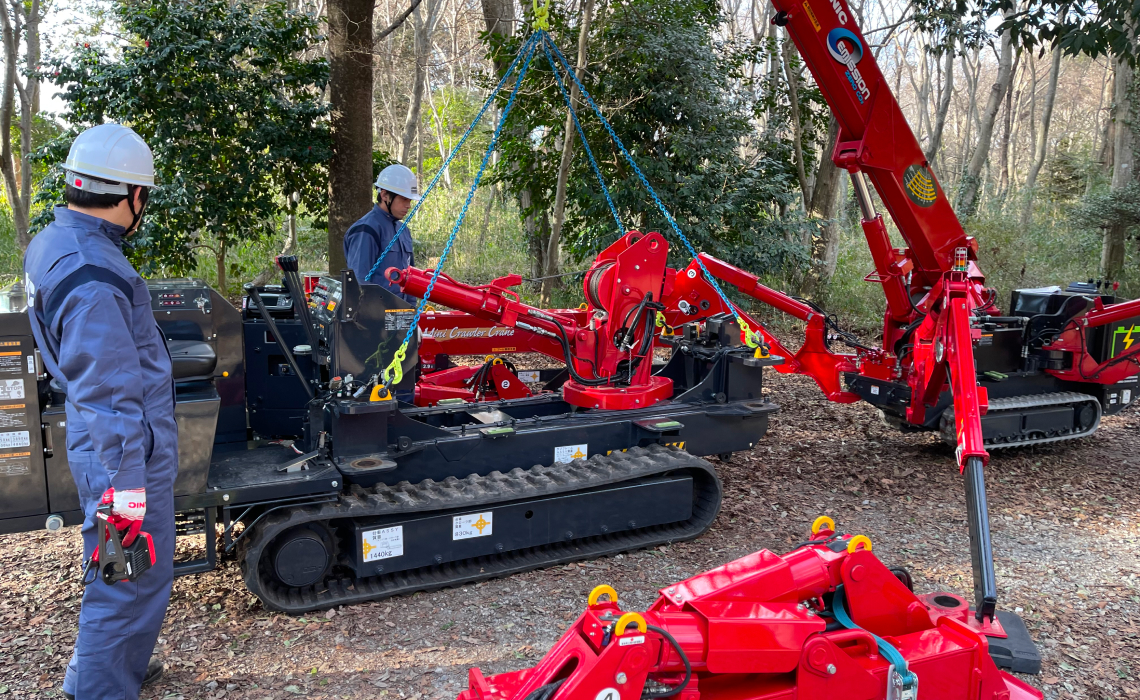
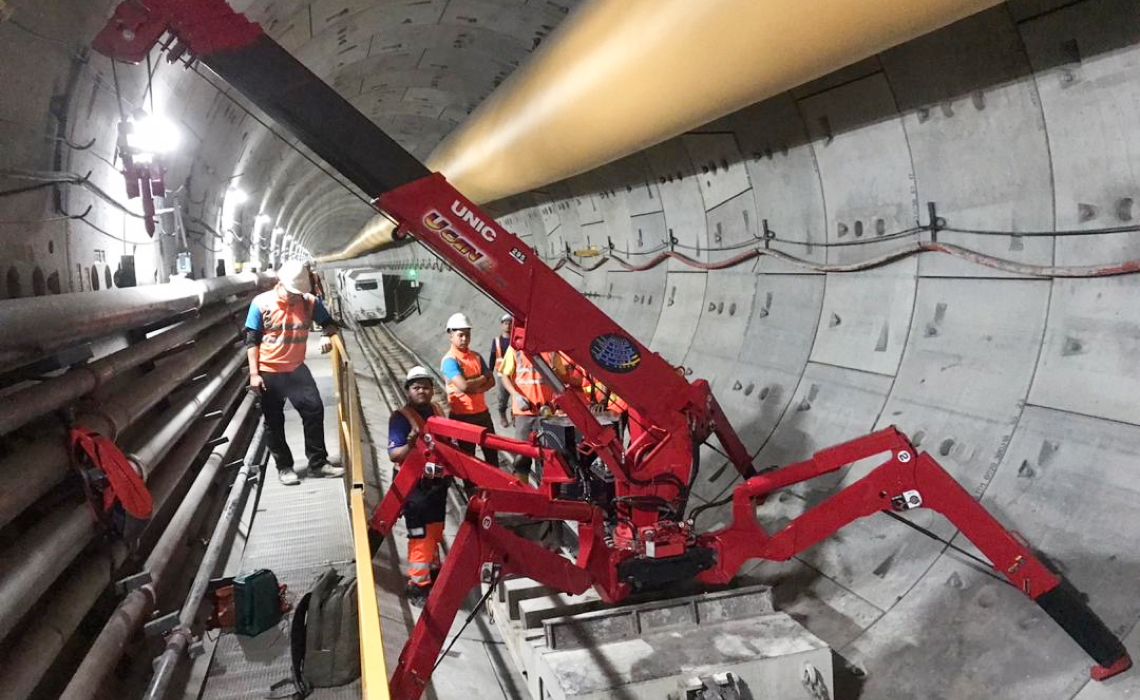
Cranes are indispensable at civil engineering and construction sites where materials often need to be transported. However, traditional cranes and truck-mounted cranes cannot access and be used in confined or indoor areas to perform their lifting tasks. This is where our mini-crawler cranes come into play, combining ease of operation, safety, noise control, and environmental performance. Thanks to their compact bodies, they can enter and work in tight spaces, making them useful at indoor construction sites, museums, inside tunnels, cemeteries, and the like. Our lineup includes a range of cranes designed to meet various needs. For example, our non-rider models can move independently even in narrow access routes, while our rider models focus on lifting capacity. We also have battery-powered models that are environmentally friendly with zero emissions. Additionally, we have cranes suited for residential construction in tight alleyways, as well as disassembled models that can be transported by helicopter to remote or mountainous areas where equipment access is challenging. We remain committed to enhancing the safety and usability of our mini-crawler cranes and will continue developing environmentally friendly products and contributing to infrastructure development around the world.
Addressing the Challenges of Residential Construction in Densely Populated and Confined Areas (announced October 29, 2024)
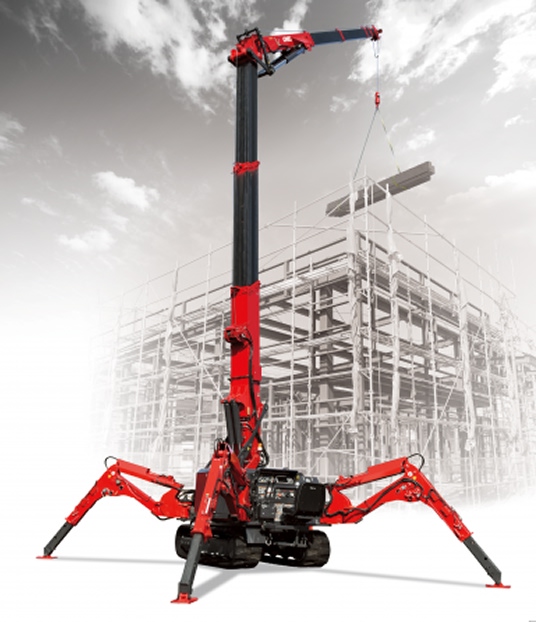
(mini-crawler crane)
While demand is increasing for new construction and renovation of reinforced concrete buildings to improve earthquake resistance and make effective use of land, it has been difficult for large crane-mounted trucks—with wide bodies and large turning circles— to access densely populated residential areas and narrow urban sites, particularly in convenient locations, such as city centers and near railway stations. In response, the Furukawa Company Group developed and launched the new U-CUBE mini-crawler crane, featuring a compact body for excellent portability, enhanced safety and operability through an LCD display, and both a vertical boom and folding boom that provide high lifting capacity. The crane significantly shortens construction periods while contributing to cost reduction and harmonious coexistence with local communities.
3. Belt conveyors: Addressing the challenges of soil transport using dump trucks
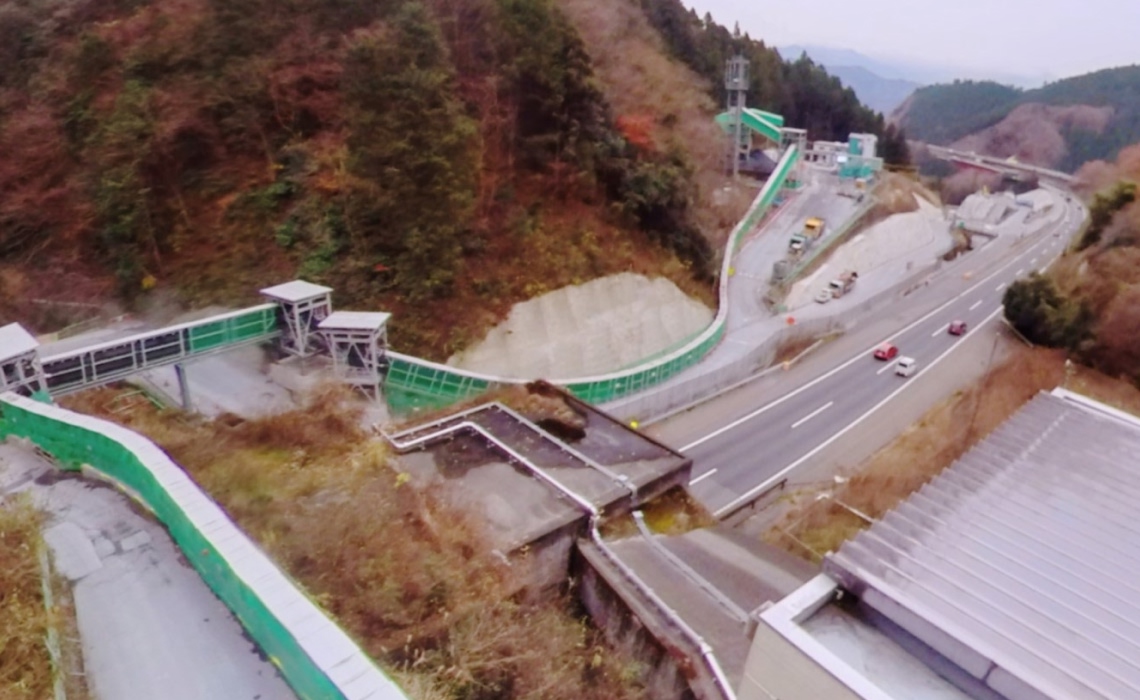
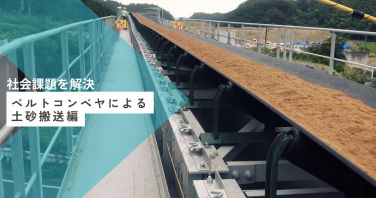
In recent years, social challenges have emerged in the transportation of earth and sand at civil engineering and construction sites. These include difficulties in securing truck drivers due to the decline in Japan’s working-age population, as well as environmental issues, such as dust, noise, and CO2 emissions from the frequent movement of dump trucks, which also affect the surrounding environment. In response, belt conveyors are gaining attention as a new method for transporting earth and sand. This approach offers multiple advantages, including reduced construction time, lower labor costs, avoidance of traffic congestion and accidents, consideration for the surrounding environment, and decreased CO2 emissions.
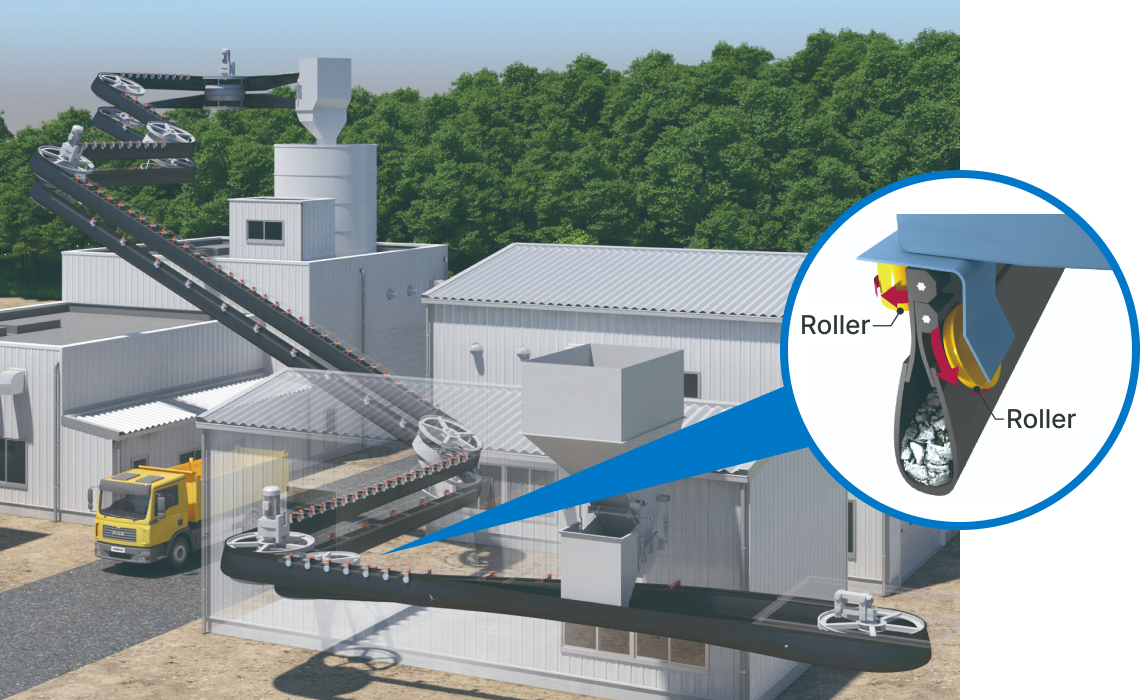
Accordingly, they offer a promising alternative to dump trucks. One solution, sold exclusively in Japan by the Company, is the SICON® enclosed hanging belt conveyor, which offers additional benefits beyond traditional belt conveyors. By enclosing the earth and sand in bags that are suspended from it like a monorail, SICON® significantly reduces spillage, dust, and noise. Compared with regular belt conveyors, another key advantage is its ability to change direction without requiring transfer points, enabling the installation of highly efficient and space-saving conveyor lines customized to specific site conditions. These exceptional features have received acclaim, and SICON® has been adopted for projects aimed at enhancing national resilience and disaster prevention, including new dam construction and river flood control works, with inquiries increasing as a result.
We will continue addressing social issues related to earth and sand transportation in future projects.
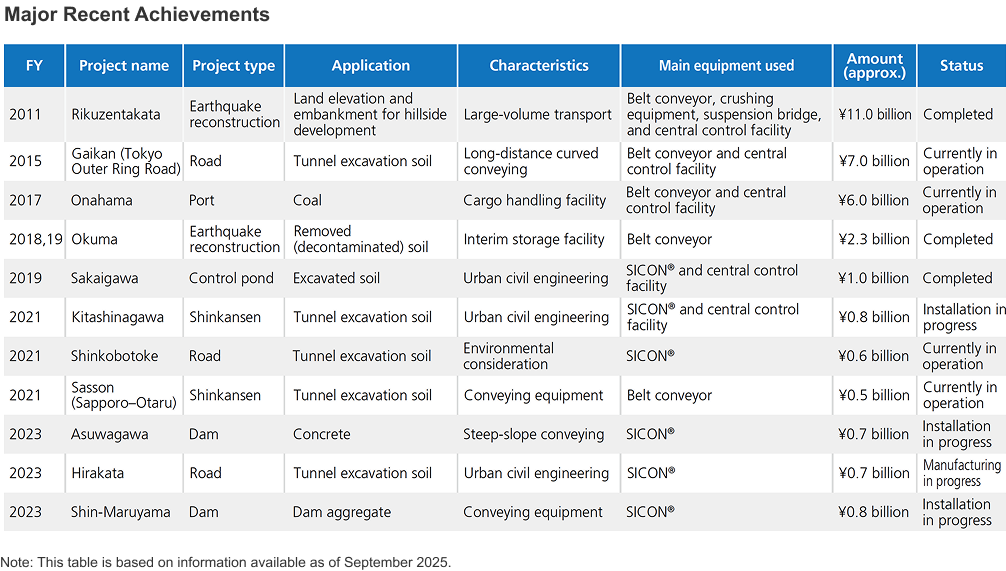
features to address social issues
Installation of SICON® enclosed hanging belt conveyor (announced November 29, 2024)
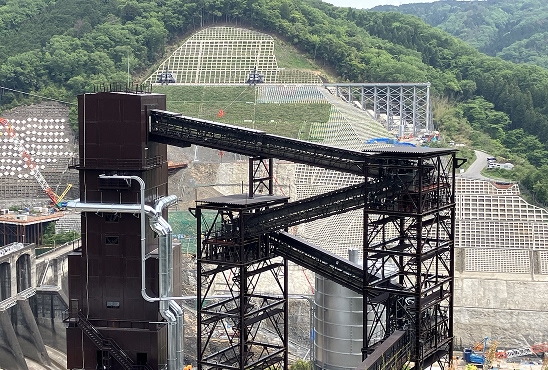
At dam construction sites, installing belt conveyors along complex transport routes with many slopes and curves has traditionally required multiple standard flat-belt conveyors, creating challenges in securing space for transfer sections and other connecting points. In this case, with residential areas located near the site, careful consideration for the surrounding environment was essential.
The Furukawa Company Group’s SICON® belt conveyor allows flexible angle adjustments, making it possible to install conveyors along complex transport routes without the need for transfer sections and within limited spaces. Its enclosed suspended structure also prevents material spillage and suppresses vibration and noise, thereby significantly reducing environmental impact.
During dam embankment construction, the use of SICON® enabled large-volume concrete transport on steep slopes of up to 45 degrees, which would be difficult to achieve with conventional equipment. With roughly twice the transport capacity of conventional systems, it allows a significant reduction in construction time.
In mountain tunnel construction, SICON® enables the transport of excavated soil even at sites with complex terrain and narrow roads where access by dump trucks is difficult. Compared with dump truck transportation, SICON® not only enables significant reduction in construction time but also suppresses noise and vibration, allowing soil transport with minimal impact on the habitats of rare animal species.
4. High-purity metallic arsenic: Essential material for semiconductors and communications
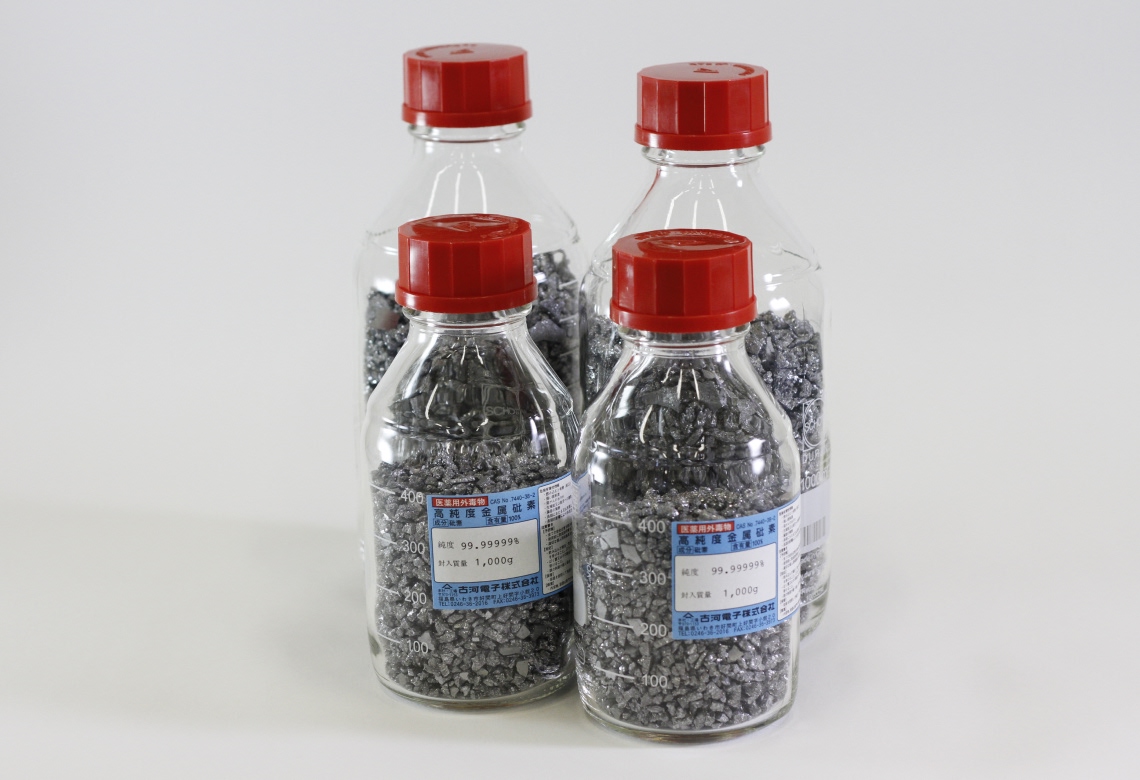
High-purity metallic arsenic is mainly used as a raw material for compound (gallium arsenide) semiconductors. These semiconductors are utilized in high-frequency electronic devices, as well as in red laser diodes (LDs) and light-emitting diodes (LEDs). In the past, they were primarily used in communication equipment, DVD pickup lasers, red LEDs for traffic lights, and automobile tail lights. In recent years, metallic arsenic used for LD and LED applications has been increasingly replaced by lower-cost overseas products that do not require the same top-level purity. Accordingly, the Furukawa Company Group is focusing on supplying high-purity metallic arsenic (purity: 99.999995%) for cutting-edge technologies that require exceptional purity, such as high-speed communications and sensing technologies using high-output infrared LDs.
Among everyday applications, the most common use of our high-purity metallic arsenic is in high-frequency electronic devices, as it contributes to the advancement of high-speed communications in smartphones and communication base stations. Its use as a material for high-output infrared LDs has also been increasing in recent years. In addition, our high-purity metallic arsenic is used as a light source for Light Detection and Ranging (LiDAR) systems and contributes to technologies such as facial recognition and vehicle distance measurement for autonomous driving through infrared-based remote sensing. It is also used for measuring and monitoring crustal deformation caused by fault uplift and subsidence.